
First, find the real problem
A tired lawn does not always need a full renovation. It may be compacted underfoot, covered by too much thatch, short of water, uneven, or simply slow because the weather is still cool. Spend ten minutes checking before choosing a machine.
Step 1 — Check the lawn in a few places
Walk the whole area. Look for hard ground, water sitting on the surface, thin growth, spongy patches and heavy dead material around the runners. Check a healthy patch as well as the worst patch so you have something to compare.
Step 2 — Test for compaction and thatch
Press a screwdriver into moist soil. If it is difficult in several places, compaction may be part of the problem. Then part the leaves and feel the layer between green growth and soil. A thick, springy brown layer points toward excess thatch.
Step 3 — Wait for active growth
Renovation is easier on a lawn that is actively growing and able to recover. Avoid a major treatment when the lawn is dormant, heat-stressed, waterlogged or already badly weakened. If you are unsure, send AGEH clear photos before booking.
Step 4 — Measure and check access
Measure length × width in metres to get square metres. Split an odd-shaped lawn into smaller rectangles and add them together. Note the narrowest gate, steps, steep slopes, irrigation heads and anything that affects safe access.
Step 5 — Prepare before the machine arrives
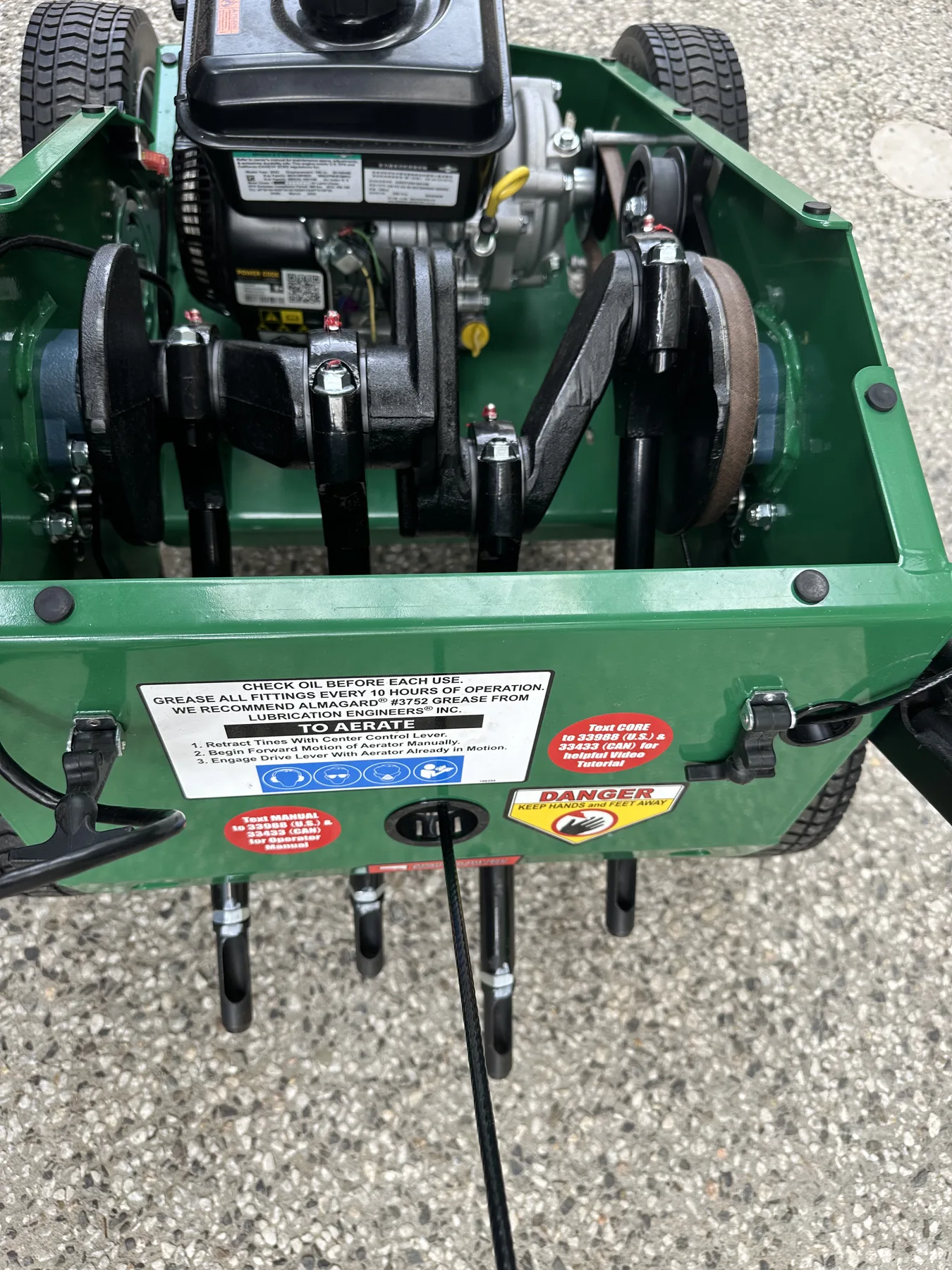
Mow to a sensible preparation height for your grass, remove loose objects, mark irrigation and clear children and pets from the work area. Read the equipment instructions before starting and use the recommended protective gear.
Using the aerator
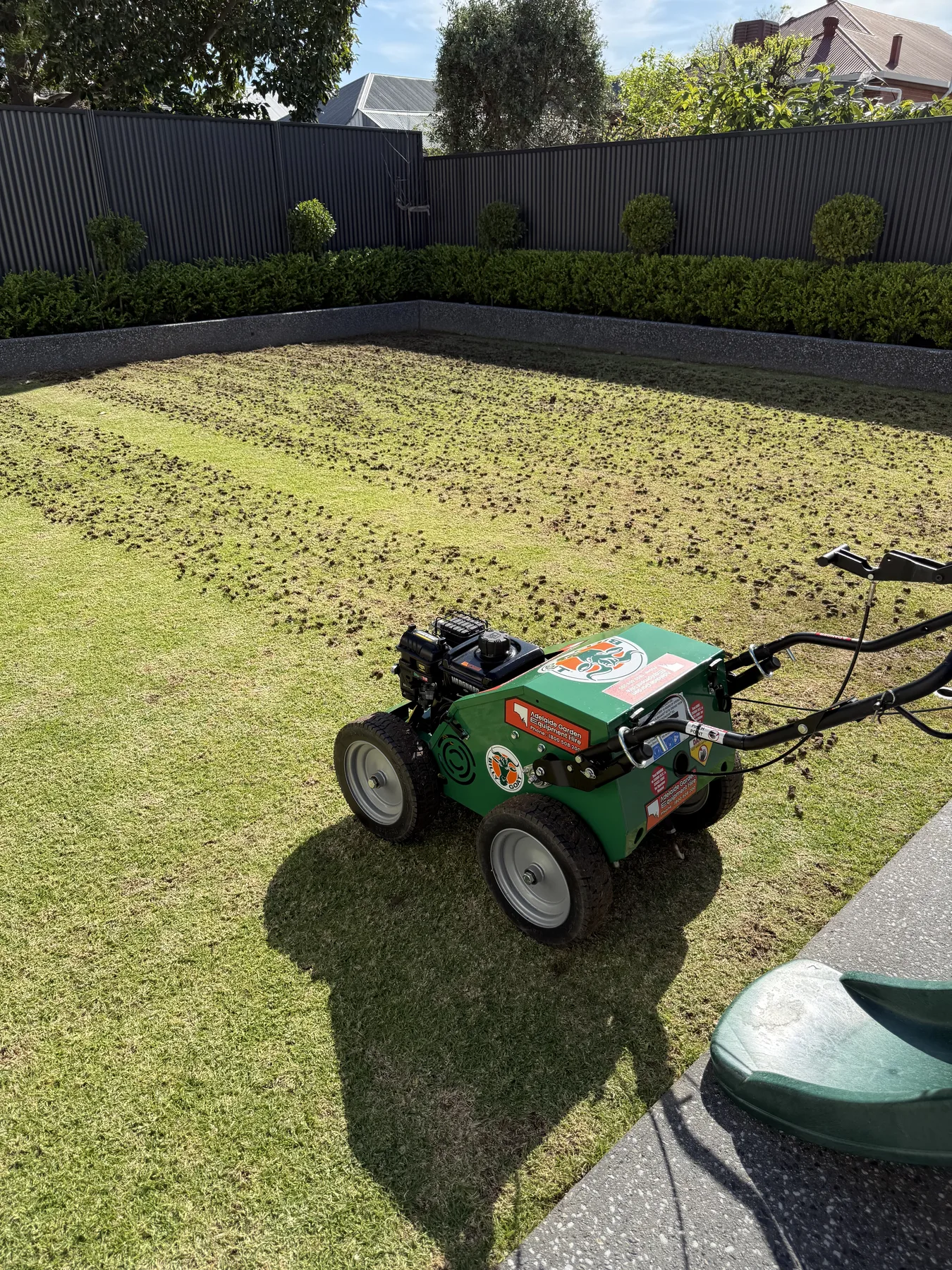
The Billy Goat aerator removes small cores so air, water and nutrients can move into compacted soil. Work methodically in straight, overlapping passes. Do not force tight turns or rush. Follow the supplied operating instructions and ask AGEH to demonstrate controls you are unsure about.
Step 6 — Finish and help recovery
Leave clean soil cores to break down naturally unless site conditions call for collection. Water according to the lawn and weather, keep traffic light, and mow again only when the lawn is ready. If topdressing is part of the job, keep the layer light enough for grass tips to stay visible.
A simple equipment list
- Mower for the preparation cut.
- Billy Goat aerator when compaction is confirmed.
- Billy Goat scarifier only when excessive thatch is confirmed.
- Billy Goat vacuum or suitable collection equipment for renovation debris.
- ECO 250 spreader when suitable topdressing is included.