
What topdressing is for
Topdressing is a thin layer of suitable material spread over an established lawn. It can help smooth minor unevenness, support the existing soil and form part of a renovation. It should not bury the lawn or be treated as a one-step fix for every drainage or soil problem.
Step 1 — Decide why you are topdressing
Write down the main goal: light levelling, adding a compatible lawn blend, finishing a renovation or helping a low spot. If water regularly pools or the level change is large, get advice before ordering material.
Step 2 — Measure the lawn in metres
For a rectangle, multiply length by width. A 10 m × 5 m lawn is 50 m². Split an irregular lawn into smaller rectangles, calculate each one and add them. Keep garden beds and paved areas out of the total.
Step 3 — Choose a light application depth
For planning, 5 mm is a light dressing, 10 mm is a fuller pass and 15 mm needs extra care. Grass tips should remain visible. Confirm the actual depth for your grass, condition and material before ordering.
How much soil should you order?
Use this formula: area in m² × depth in mm ÷ 1,000 = cubic metres. For example, 50 m² at 10 mm is 0.50 m³. The planner also shows a 10% allowance so you can discuss settling, site variation and supplier measurements without treating it as an automatic order quantity.
Bag sizes, moisture, density and bulk-supply measurements vary. Always confirm the final quantity and delivery format with the supplier.
Step 4 — Match the material to the lawn
Ask for a fine, screened lawn topdressing product compatible with the existing soil. Sandy loam or a purpose-made lawn blend may suit many established lawns, but the best choice depends on whether the job is levelling, soil improvement or both.
Step 5 — Prepare the lawn
Mow to a suitable height, remove debris and complete any planned aeration or scarifying first. Feed only if it suits the grass, season and product instructions. Plan where bulk material can be placed without blocking access.
Step 6 — Move and spread the material
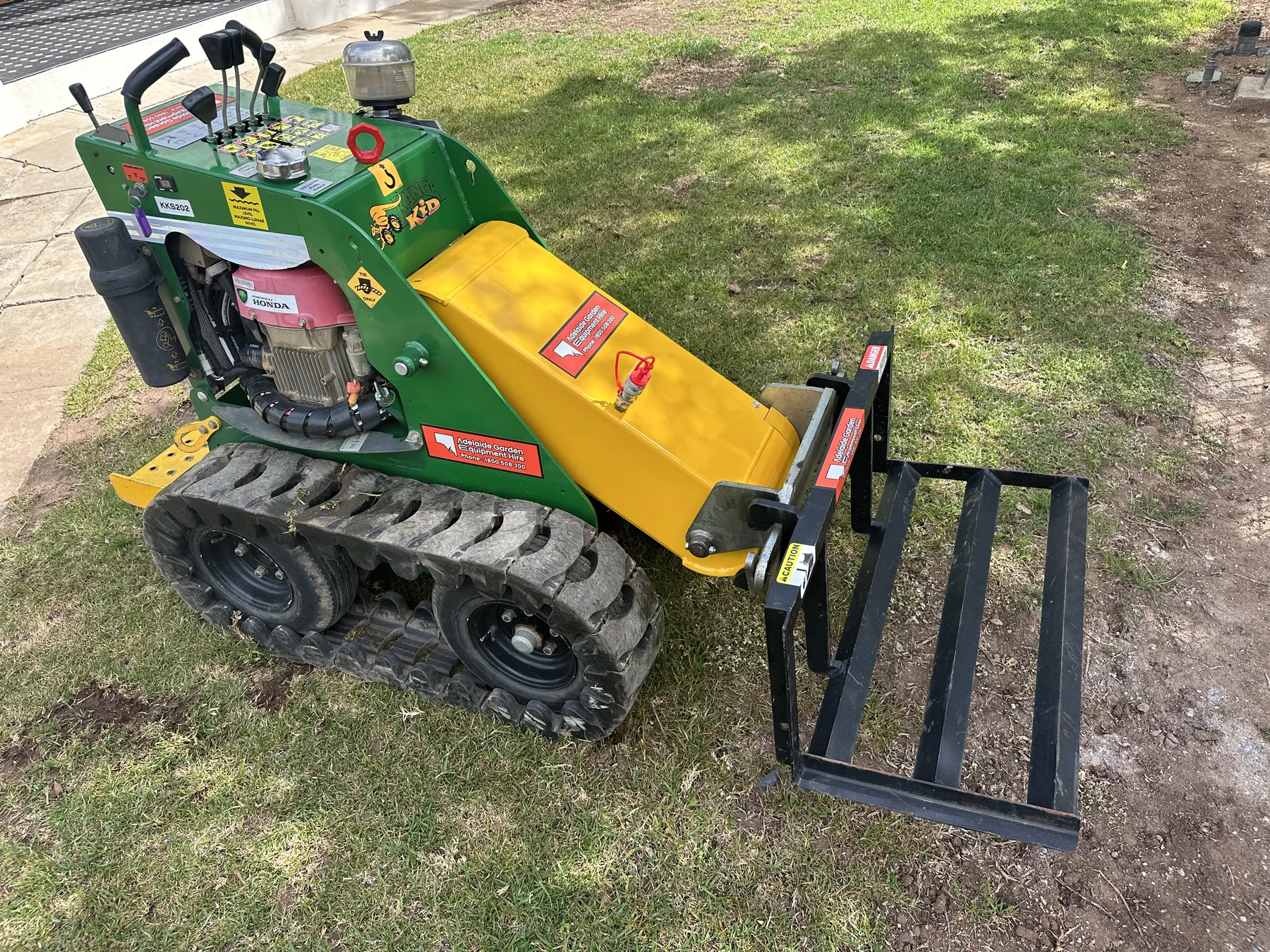
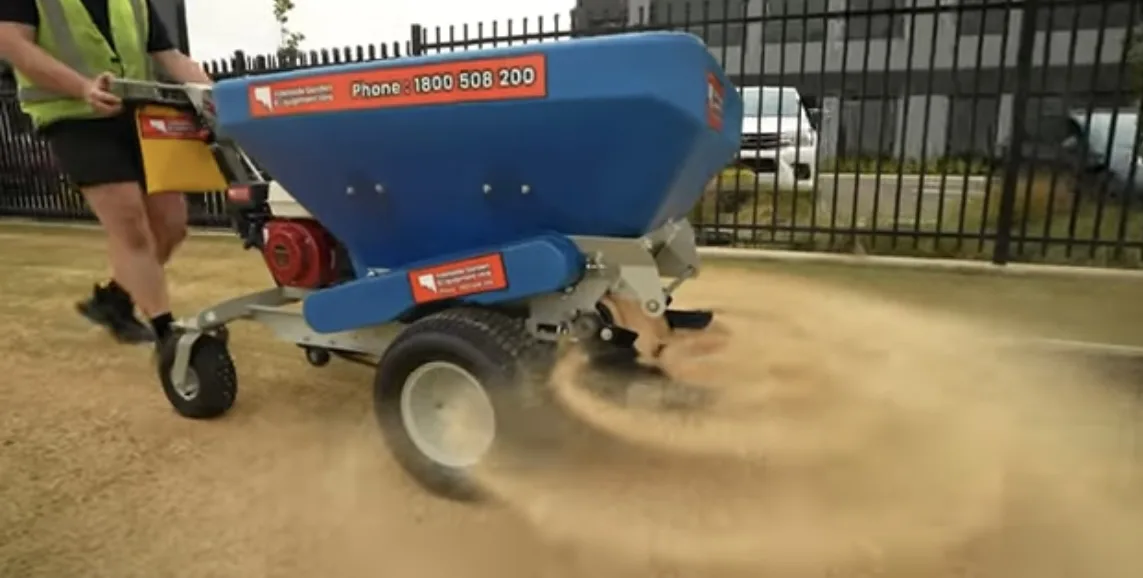
The Kanga Kid can support suitable material-handling hire tasks where access allows. The ECO 250 helps distribute topdressing evenly. Work in controlled passes, then use a levelling tool or rake to settle material into low spots without covering the leaf.
Step 7 — Water and check the finish
Water in a way that suits the product, grass and current conditions. Recheck low spots after the material settles. Avoid adding a second heavy layer just because some material has moved into the canopy.
Plan your job
Build a lawn project plan
Enter the measurements and what you know. This planner gives you a useful starting point, not a final agronomy or product prescription.
Further reading
These sources support the measuring and general renovation context used in this guide.