
Why the grass type matters
The same treatment can be gentle for one lawn and too aggressive for another. Your grass type affects mowing height, recovery speed, renovation timing, fertiliser choice and how much leaf can safely be removed.
Step 1 — Look at the leaf
Take a close-up photo in good light. Buffalo usually has a broader leaf with rounded tips. Couch is finer and forms a dense mat. Kikuyu is coarser and fast-moving. Cool-season lawns often have upright, softer leaves and stay active in cooler weather.
Step 2 — Follow the runners
Lift a runner gently and see how the lawn spreads. Buffalo is mostly carried by runners above the ground. Couch and kikuyu also have strong growth below the surface, which helps explain why they can often recover from a firmer warm-season renovation.
Step 3 — Check the season and shade
Warm-season lawns slow and lose colour in cold weather. Cool-season grasses behave differently. Shade tolerance, wear and watering history provide extra clues, but do not rely on colour alone.
A simple comparison
| Lawn | Useful clues | Renovation approach | Fertiliser starting point |
|---|---|---|---|
| Buffalo | Broad leaf; mostly above-ground runners. | Keep scarifying and mowing conservative. Aerate when compaction is confirmed. | Slow-release lawn fertiliser labelled as suitable for buffalo. |
| Couch | Fine leaf; dense surface and below-ground growth. | Can often handle a stronger renovation during active growth, but condition still matters. | Complete slow-release lawn fertiliser labelled for couch and the current season. |
| Kikuyu | Coarser leaf; vigorous runners and quick warm-weather growth. | Control height and thatch, then allow time for a strong recovery in active growth. | Complete fertiliser labelled for kikuyu; do not exceed its printed rate. |
| Cool-season | Upright, softer leaf; stronger performance in cooler conditions. | Avoid copying an aggressive warm-season program. Work lightly and time it for active growth. | Balanced product specifically labelled for the identified cool-season grass. |
Step 4 — Decide what problem you are solving
Hard soil points toward aeration. Thick, springy thatch may point toward scarifying. Low spots may call for carefully planned topdressing. Thin growth could also come from shade, irrigation or nutrition, so equipment is only one part of the answer.
Step 5 — Measure and photograph
Record square metres, the narrowest access point, sunny and shaded areas, slope and irrigation. Take one whole-lawn photo plus close-ups of the leaf, runners and problem areas. These details make an AGEH enquiry much more useful.
Step 6 — Build a gentle first plan
Choose the minimum treatment that addresses the diagnosed problem. A preparation mow, one well-chosen machine and good aftercare can be better than stacking every renovation step into the same weekend.
What to feed it
Use a lawn fertiliser that names your grass type on the label. In the AGEH planner, select whether the printed label rate is in litres or grams per square metre, then enter that rate rather than relying on a generic number. Do not apply more than the label allows, and avoid applying to a severely stressed lawn.
What equipment may fit
- Mower for the correct preparation height.
- Billy Goat aerator when compaction is confirmed.
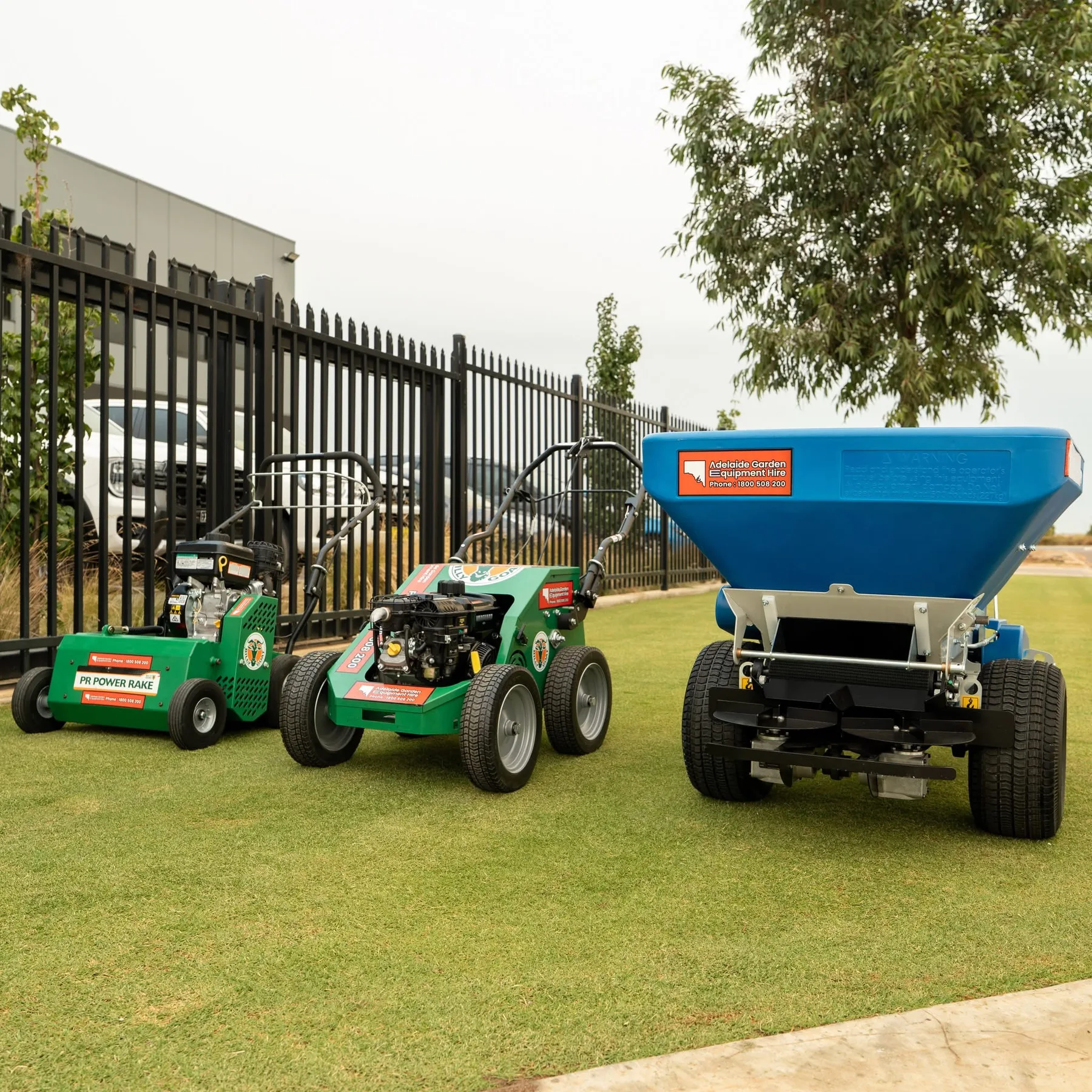
- Billy Goat scarifier when excessive thatch is confirmed and the grass can recover.
- Billy Goat vacuum for suitable renovation clean-up.
- ECO 250 spreader for an even application of suitable topdressing material.